Learning Through Play: Why It Matters in Early Childhood Education
6 min readBright – The School Editorial TeamPublished March 2026
When observing a preschool classroom, an untrained eye might see blocks scattered across the floor, vibrant finger-paint markings, and children engaged in pretend tea parties. To developmental psychologists and early childhood educators, however, this scene represents intense neurological development. Play is not a recreation away from serious academic study; it is the foundational medium through which young human brains construct understanding.
1. The Developmental Science of Play
During the first seven years of life, the human brain develops faster than at any other period. Neural connections—synapses—are formed at an astonishing rate of over one million per second. Neuroscientific research confirms that active, hands-on, emotionally engaged experiences form durable memory pathways far more effectively than passive memorization.
When children manipulate physical objects, experiment with cause and effect, and solve open-ended challenges, their brains release neurotransmitters such as dopamine and brain-derived neurotrophic factor (BDNF). These chemicals enhance attention span, memory retention, and mental flexibility. Far from being frivolous, playful exploration is biological preparation for analytical thinking.
2. Four Essential Types of Purposeful Play
Not all play is identical. A balanced early childhood learning environment incorporates multiple distinct modalities of play to nurture different aspects of child growth:
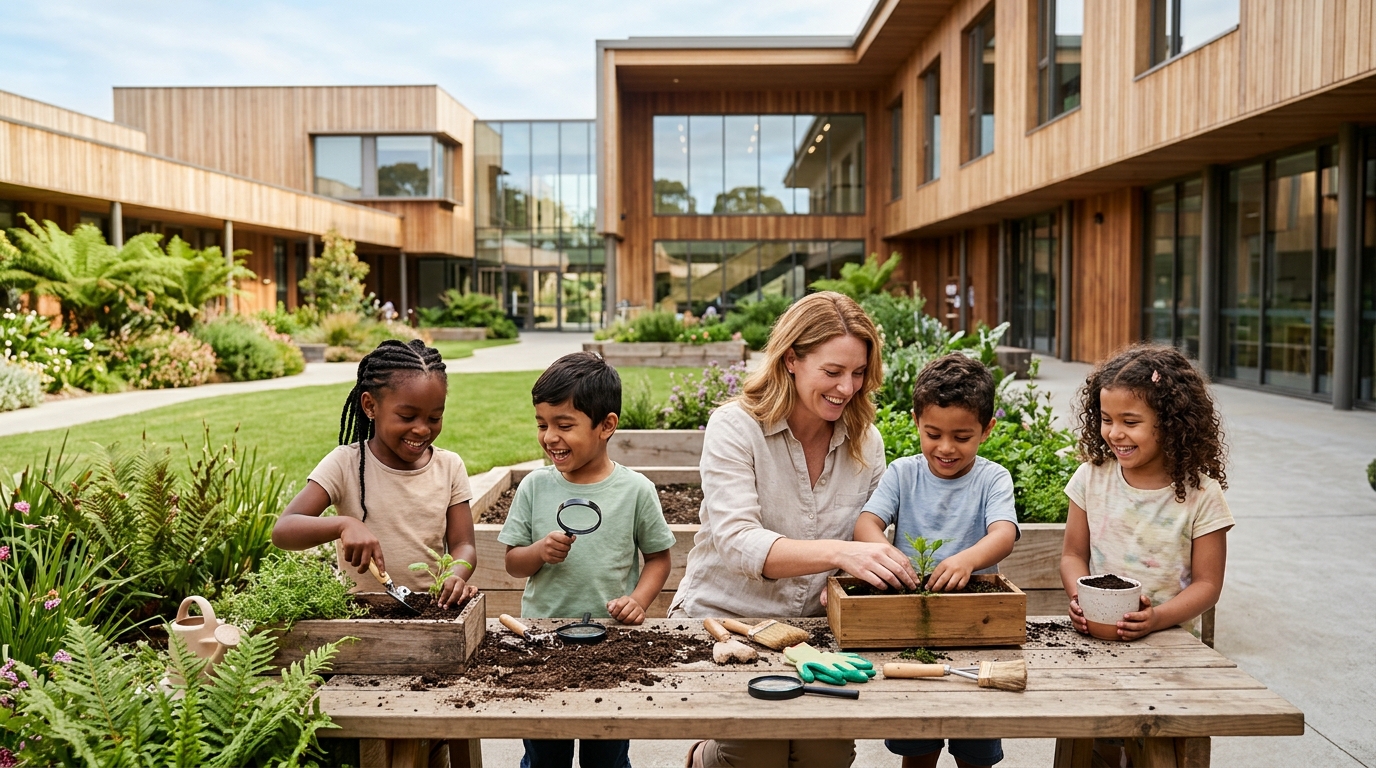
Sensory & Exploratory Play: Involving water, sand, natural textures, and modeling clay. This type of play stimulates fine-motor tactile pathways and calms nervous systems.
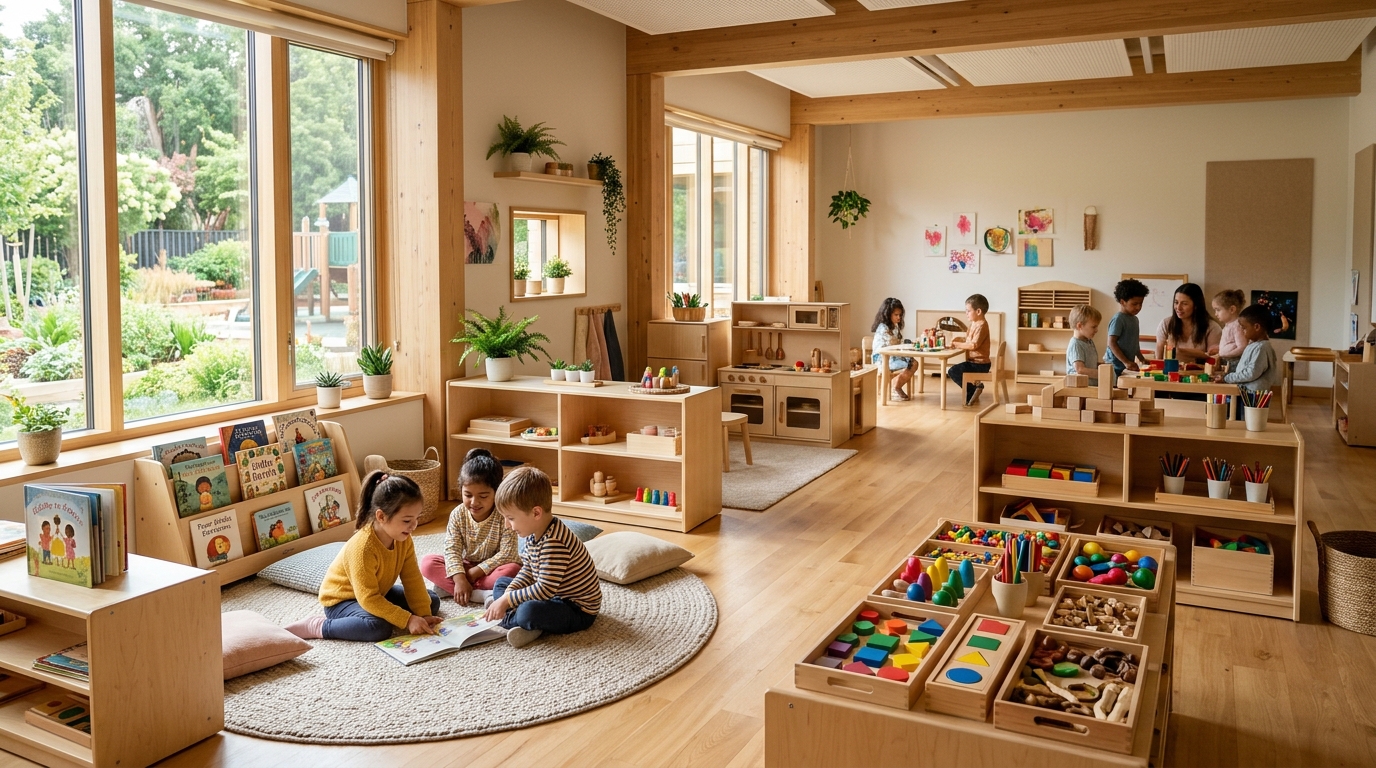
Constructive & Spatial Play: Building towers with wooden blocks, assembling puzzle pieces, and connecting interlocking bricks. This directly builds spatial visualization, balance comprehension, and early mathematical reasoning.
Dramatic & Role-Play: Pretending to be doctors, teachers, grocery store clerks, or family figures. Role-playing develops perspective-taking, complex linguistic dialogue, and empathy.
Physical & Rough-and-Tumble Play: Running, climbing, balancing, and skipping. This develops vestibular balance, proprioception (body awareness), and gross-motor stamina.
3. Cognitive & Executive Function Growth
Executive functioning refers to the cognitive control processes that enable humans to plan, focus attention, remember complex multi-step instructions, and juggle multiple tasks successfully. These skills are more predictive of long-term academic success than early IQ scores.
During structured play, executive function is continuously tested. Consider a child building a block tower that keeps tumbling down:
Working Memory: The child remembers that placing a large block atop a small block led to collapse previously.
Inhibitory Control: The child resists the impulse to rush and carefully places the next piece with gentle deliberation.
Cognitive Flexibility: When the preferred block is unavailable, the child pivots to test an alternative architectural solution.
Key Parent Takeaway
Do not measure your preschooler’s progress solely by worksheets or spelling drills. A child who spends an hour experimenting with geometric building blocks is mastering essential foundational physics and geometry concepts.
4. Social Cohesion and Emotional Regulation
Unlike solitary digital screens, cooperative classroom play requires children to navigate human relationships in real time. In a playgroup or kindergarten environment, children must negotiate who plays the driver, share limited red crayons, and learn how to apologize when an accidental bump occurs.
These interactions teach vital emotional self-regulation. A child learns that shouting pushes peers away, while calm negotiation invites collaboration. By learning to delay immediate gratification during group play, children build social competence that supports classroom harmony throughout primary school.
5. The Teacher’s Role as Play Facilitator
High-quality play-based learning is never chaotic abandonment. It requires intentional pedagogical curation. Educators at institutions like Bright – The School act as intentional scaffolding facilitators:
They design structured play corners with purposeful materials matched to weekly learning themes.
They introduce open-ended inquiry questions during play (e.g., "What do you predict will happen if we add water to this dry soil?").
They observe individual student challenges and provide timely verbal prompts that nudge problem-solving forward.
6. Practical Play-Based Activities at Home
Parents can easily reinforce play-based learning at home without expensive educational gadgets:
Kitchen Sensory Sorting: Have your child sort beans, pasta shapes, or plastic containers by size and color.
Cardboard Box Creations: Transform discarded delivery boxes into space rockets, cozy reading caves, or animal hospitals using crayons and child-safe tape.
Nature Treasure Hunts: Collect fallen leaves, smooth pebbles, and flower petals during evening park strolls, arranging them by symmetry and texture.
By championing play as a dignified, serious educational tool, parents and educators provide children with the confidence, curiosity, and resilience needed for lifelong academic excellence.
BT
Bright – The School Editorial Team
Curated by early childhood educators and academic coordinators at Bright – The School in Bandlaguda Jagir, Hyderabad. Dedicated to providing parents with research-backed learning insights.
A Little World of Big Dreams
Admissions are open for Preschool to Grade 5 in Bandlaguda Jagir, Sun City, Hyderabad. Schedule a personalized campus walkthrough today.
Selecting your child’s first school is a milestone decision. Learn what questions to ask during campus visits and what red flags to watch for during early childhood evaluations.
Every child develops at their own distinct pace. Understand the core developmental milestones between ages 3 and 8 to guide and celebrate your child’s growth.
✨ 30-Second Quick Booking
Book a Campus Tour
Experience our classrooms, meet our caring educators, and explore our learning environments in Sun City, Bandlaguda Jagir.
💬
Connecting to WhatsApp...
WhatsApp is opening with your visit details. Please tap Send in WhatsApp to connect directly with the Bright Admissions Desk (+91 95151 31333).